Sign Up
School Account Sign Up

Lesson ID: 11189
Discover the wild, dry, and surprising world of deserts—from scorching sands to icy tundras—and learn how these extreme places shape life on the earth.




Into the Desert: Earth’s Wildest Climates
Imagine standing in a place so dry that it hasn’t rained in years, or so cold that every drop of water is frozen solid. Welcome to the deserts of our world—lands of extremes where survival depends on creativity and adaptation.
Despite what you might picture, deserts aren’t just endless sand dunes. They exist on every continent and come in fiery and frozen varieties alike.
Deserts cover about one-fifth of the earth’s land surface, making them the largest type of land environment on the planet. But what truly makes a desert isn’t heat—it’s dryness.
To qualify as a desert, a region must receive less than 10 inches (25 centimeters) of rain each year, meaning more water is lost through evaporation than falls from the sky. Some deserts go years without measurable rainfall.
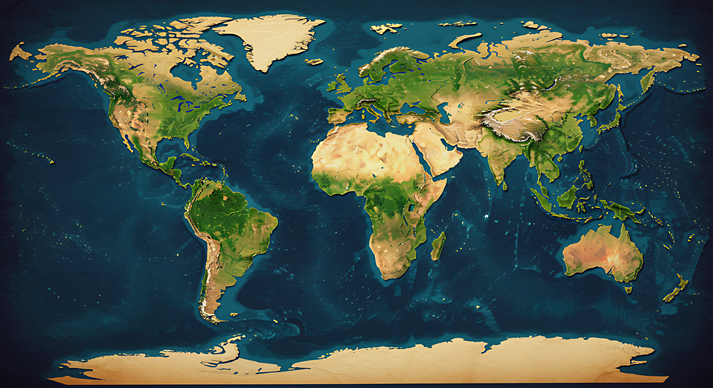
What Makes a Desert a Desert?
The main feature of all deserts is a dry climate, also called an arid climate. Arid means there is a water shortage: more water leaves the land through evaporation than enters it through rainfall.
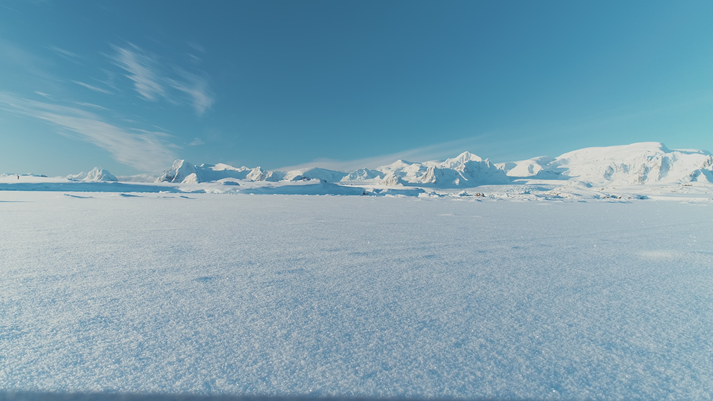
This dryness can occur in both hot and cold regions. So while we might think of deserts as blistering wastelands, Antarctica—yes, the icy one—is actually the largest desert on Earth. It’s so cold that most of its water stays locked up as ice and snow, leaving the air too dry for rain or melting.
Deserts can form in a few ways.
Far from oceans, where moist air rarely reaches (like central Asia’s Gobi Desert).
Behind mountains, where air loses moisture as it rises and cools—creating a “rain shadow” on the far side.
Near the poles, where frigid air holds very little moisture.
Along cold ocean currents, where cool air meets warm land and prevents rain from forming (like the Atacama Desert in Chile).
No matter how they form, deserts share the same challenge: too little water.
The Four Types of Deserts
Hot and Dry Deserts
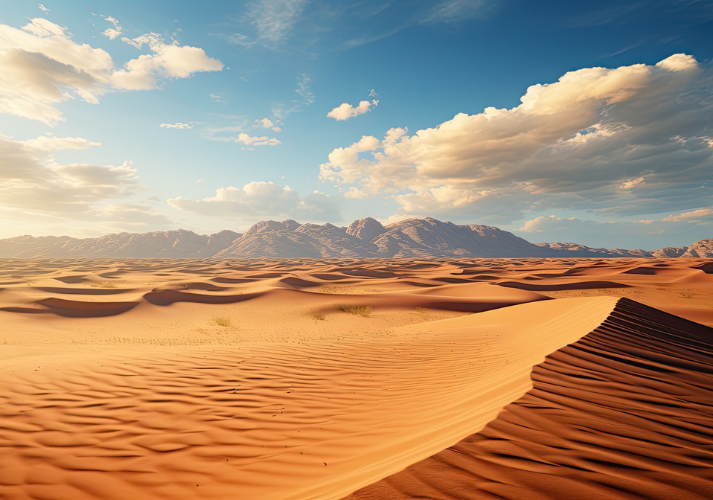
These are the deserts most people picture: endless dunes, blazing sun, and heat shimmering above the sand.

Location examples: The Sahara in Africa, the Arabian Desert in the Middle East, and the Mojave in North America.
Climate facts: Summer temperatures often climb above 100°F (38°C), and rainfall is rare.
Soil: Sandy or rocky with little organic material.
Life: Only plants and animals with amazing water-saving tricks can survive here.
Semi-Arid Deserts
Slightly cooler but still very dry, semi-arid deserts are sometimes called steppe regions.
Location examples: Red Rock Canyon in Nevada and Castle Valley in Utah.
Climate facts: Average temperatures hover around 75°F (24°C) with cooler nights around 50°F (10°C).
Soil: Sandy or rocky with some grass and shrubs.
Semi-arid deserts often form between true deserts and grasslands, creating a transition zone where tough plants like sagebrush thrive.
Coastal Deserts
If you’ve ever stood near a foggy coastline and wondered, “How can this be a desert?”—welcome to the strange world of coastal deserts.
Location examples: The Namib Desert in Africa and the Atacama Desert in South America.
Climate facts: Summer temperatures rarely rise above 70°F (21°C), and winter nights can drop to 25–40°F (-4–4°C).
Soil: Fine and sandy.
These deserts exist where cold ocean currents cool the air before it moves over the land, stopping moisture from forming rain clouds. Instead of rain, these deserts often get fog—just enough for special plants to “drink” from the air.
Cold Deserts
Cold deserts are found in polar or high-altitude regions, where it’s too cold for much precipitation.

Location examples: Antarctica and Greenland.
Climate facts: Summers stay near 70–78°F (21–25°C); winters plummet to below freezing, sometimes reaching –40°F (-40°C).
Soil: Often heavy and moisture-retaining, with frozen layers beneath.
Cold deserts may not look like deserts at first glance, but their lack of liquid water and sparse vegetation make them just as dry and challenging as their sandy cousins.
Deserts in Motion
Deserts are far from lifeless. Winds constantly shape and reshape their landscapes, carving rocky cliffs, piling dunes, and scattering dust across continents.
In fact, desert dust helps fertilize rainforests and oceans with nutrients—proof that even the harshest environments play a vital role in keeping the earth’s systems balanced.
So, What Do They All Have in Common?
Whether blazing hot or bitterly cold, coastal or continental, all deserts share three key traits.
Dryness – Less than 10 inches of rain per year.
Temperature extremes – Burning days and freezing nights.
Adaptation – Every living thing must find a clever way to survive with minimal water.
These traits make deserts some of the most fascinating biomes on the earth—harsh, yes, but full of surprising life and beauty.
Now that you’ve explored the world’s deserts—from icy Antarctica to the windswept Sahara—it’s time to see how much you’ve absorbed.
In the Got It? section, you’ll test your understanding and think about how these incredible landscapes compare to the places where you live.

Supplies
Additional Resources


 FAVORITE
 Like
Like