Sign Up
School Account Sign Up

Lesson ID: 11142
Can ads sell more than products? Explore the 1920s consumer boom, Henry Ford’s Model T, and the persuasive power of advertising.




What Makes You Want to Buy?
Start your engine with a question: What makes you want to buy something?
Maybe an ad makes a product look useful. Maybe it makes the product seem exciting, popular, affordable, or impossible to live without. Maybe it simply repeats the same catchy phrase until your brain gives up and starts humming along. Advertising can be sneaky like that.
Advertisements do more than sell products. They reveal what a society values. They can show what people want, what they fear, what they admire, and what businesses think will get attention.
During the 1920s, advertising became especially powerful because Americans had more products to buy than ever before.
In this lesson, you will explore how mass production helped create a consumer boom in the 1920s and how advertising helped fuel it. You will focus especially on Henry Ford, the Model T, and the rise of product promotion.

Before exploring the 1920s, think about advertising today.
Answer these questions.
A Boom in Buying
Now, shift back about one hundred years.
The 1920s brought major changes to American life.
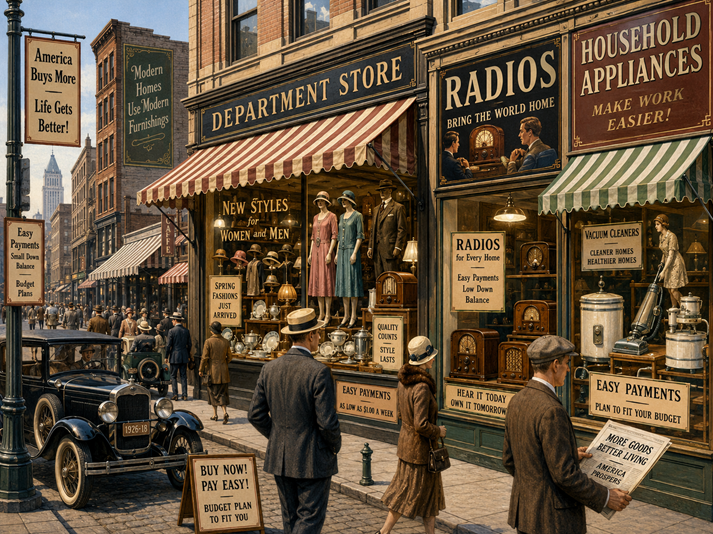
Factories produced large numbers of goods more quickly and cheaply than before. More homes gained access to electricity, which increased interest in appliances such as washing machines, vacuum cleaners, and radios. Stores and companies also promoted credit and payment plans, which allowed some consumers to buy products without paying the full price all at once.
This did not mean every American had equal access to new products. Income, race, gender, location, and job opportunities still shaped what people could afford and how they lived.
However, consumer culture expanded during the decade, and businesses competed fiercely for attention.
One of the biggest symbols of this change was the automobile.
Henry Ford and the Model T
Henry Ford did not invent the car, but he changed how many cars could be made and sold.
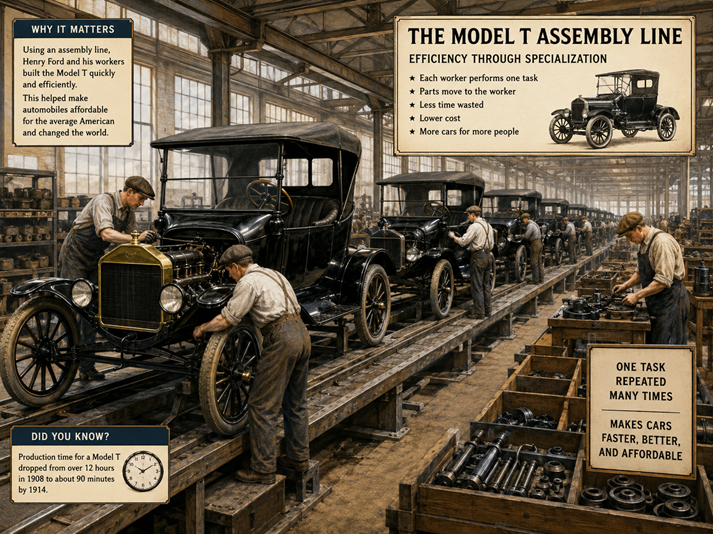
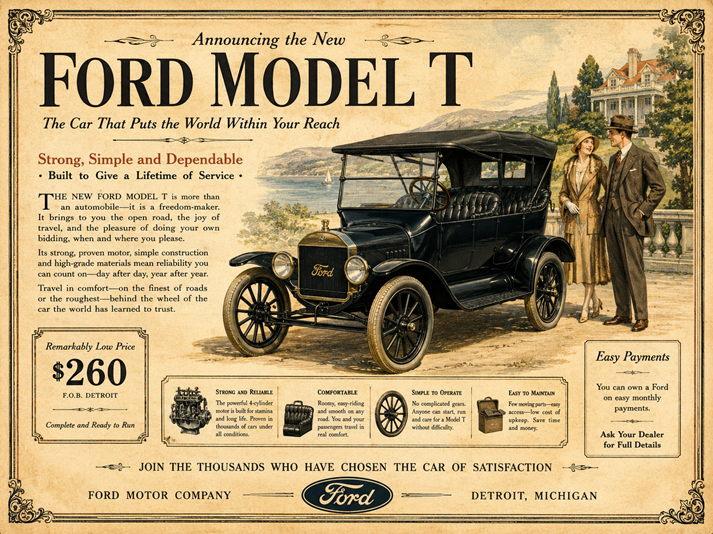
In 1908, Ford Motor Company introduced the Model T. Ford used standardized parts and assembly-line production to build cars more efficiently. Instead of a small group of workers slowly building one car at a time, workers handled specific tasks as the vehicle moved through the production process.
This system helped lower the cost of the Model T. In 1908, the car sold for about $850. By the late 1920s, the price had fallen to around $300. That price was still not pocket change, but it made car ownership possible for many more families than before.
The Model T affected more than transportation. Cars increased demand for steel, rubber, glass, oil, roads, gas stations, repair shops, and roadside businesses.
Cars also changed daily life by giving many people more freedom to travel for work, shopping, and leisure.
A Complicated Legacy
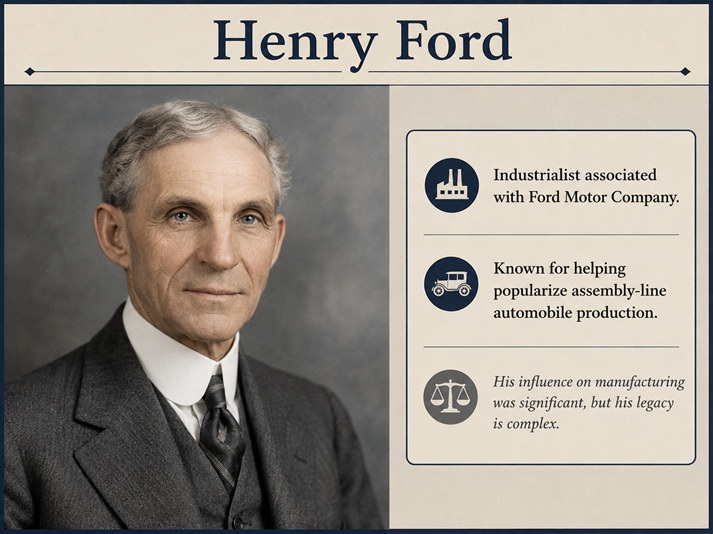
Henry Ford was an influential industrialist, but he was also a complex and controversial person. His production methods helped reshape American industry, and his company provided steady wages for many workers.
At the same time, Ford held and promoted harmful antisemitic views. Studying Ford carefully means recognizing both his economic influence and the serious problems connected to his beliefs and actions.
Why Advertising Took Off
As products such as cars, appliances, clothing, radios, and household goods became more widely available, companies needed ways to persuade people to buy them. That is where advertising came in.
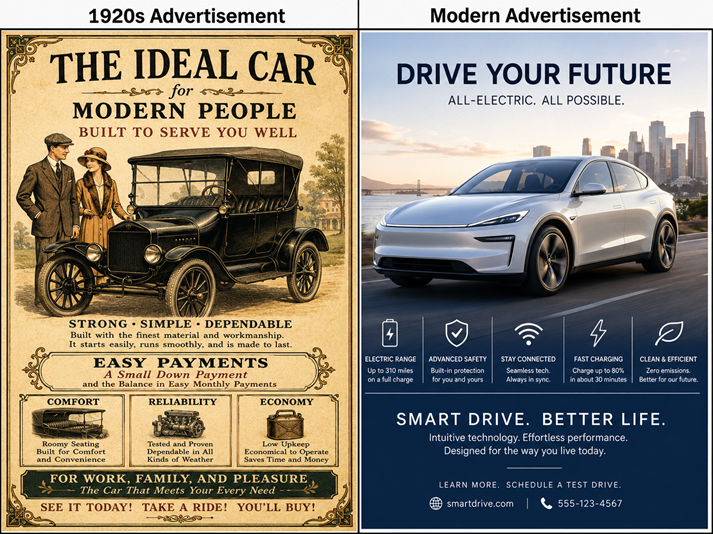
Advertising in the 1920s did not simply list product details. It often connected products to emotions, identity, status, comfort, health, beauty, family life, or modern convenience.
A car ad might sell freedom. A washing machine ad might sell time. A clothing ad might sell confidence. A radio ad might sell a connection to the wider world.
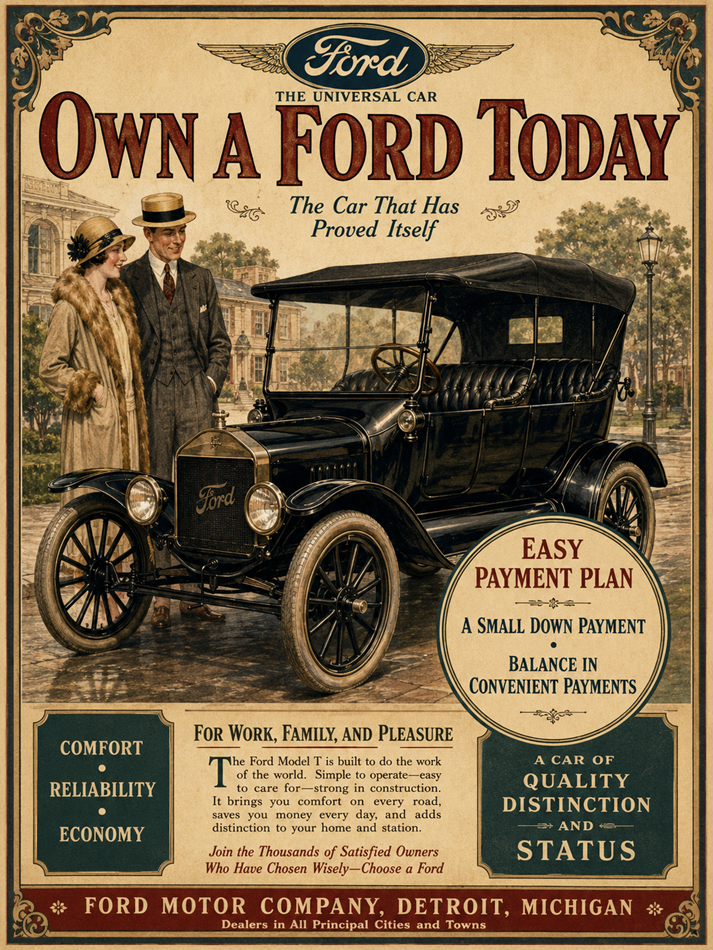
Advertisers also used payment plans to make expensive products seem more reachable. A Ford payment-plan advertisement from the 1920s promised that buyers could own a car by paying a little at a time.
That message did not just sell a car. It sold the idea that modern life could begin now, even if the buyer did not have all the money yet.
That idea became a major part of 1920s consumer culture: buy the product, improve your life, and pay over time.
Ads, Choices, and Influence
Of course, advertising does not force people to buy things. Consumers make choices for many reasons, including need, cost, quality, habit, culture, and personal taste.
Still, advertising can shape what people notice, desire, and remember. That is why studying old ads matters. They help you see how businesses tried to influence people in the past and how similar strategies still appear today.
Before moving on, answer these questions.
Ready to Analyze
You have now seen how production and promotion worked together in the 1920s. Mass production helped businesses make more goods. Advertising helped persuade people to buy them.
Next, you will practice identifying advertising techniques and explaining how they influence consumers.

Supplies


 FAVORITE
 Like
Like