Sign Up
School Account Sign Up

Lesson ID: 11127
Explore the tragic presidency of Franklin Pierce! Learn how his decisions led to national division and examine how personal loss and leadership shaped U.S. history.




Franklin Pierce’s presidency was full of drama, controversy, and unimaginable personal tragedy.
Widely regarded as one of the least memorable presidents, Pierce led the nation through one of its darkest periods. Despite being surrounded by immense challenges, including a shattered personal life and heavy public criticism, he faced the pressure of guiding a nation on the brink of division.
Discover the truth behind the 14th President of the United States and whether he rose above his struggles—or was swallowed by them.
Early Life and Background
Franklin Pierce was born on November 23, 1804, in Hillsborough, New Hampshire, into a family with a strong political background. His father, Benjamin Pierce, was a Revolutionary War hero and a prominent local politician, which shaped Franklin's early political ambitions.
Pierce's formative years were marked by a dedication to public service. After attending Bowdoin College, he studied law before entering politics.

Political Career
Pierce began his political career in the House of Representatives in 1833, quickly gaining a reputation as a moderate and an effective leader.
He was then elected as a U.S. senator in 1837, where his political alignment remained one of compromise—he believed in finding the middle ground, especially regarding the contentious issue of slavery.
Personal Tragedies
Pierce's life was plagued by personal loss.
In 1836, his first child, Franklin Pierce Jr., died at just three days old. In 1842, Franklin and Jane Pierce suffered the heartbreaking loss of their second son, Benjamin, who died at the age of 11.
However, the most devastating moment came in 1853, when Pierce's third son, Willie, died suddenly just before Pierce was elected president. This loss, coupled with his wife's crippling grief, led many to believe that Pierce was never the same after these tragedies.
The Presidency
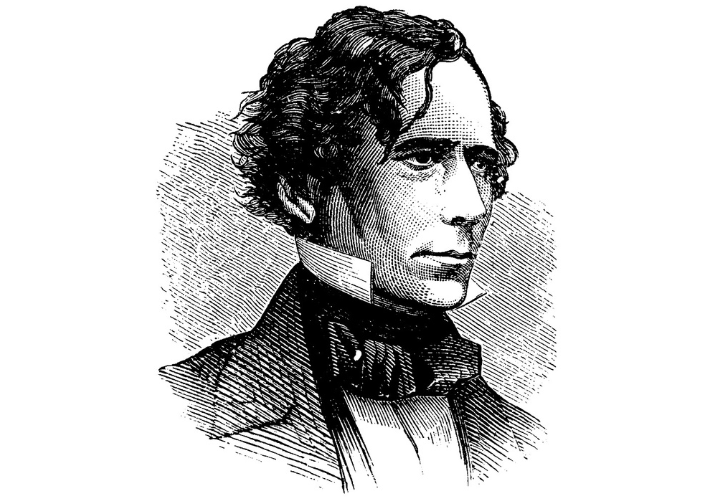
Franklin Pierce won the presidency in 1852, defeating General Winfield Scott under the Democratic Party.
His time in office, however, was marked by the Kansas-Nebraska Act of 1854, which he signed into law. This act allowed settlers in Kansas and Nebraska to decide for themselves whether to permit slavery—repealing the Missouri Compromise that had previously kept slavery out of northern territories.
The act inflamed national debates, leading to violent confrontations in Kansas, known as Bleeding Kansas.
Constant struggles between pro-slavery and anti-slavery factions also marked Pierce's presidency. His failure to mediate the conflict deepened national divisions, and his inability to effectively address these tensions led to his decline in political popularity.

Challenges and Struggles
Throughout his time in office, Pierce struggled with the weight of his personal tragedies, his grief over the loss of his sons, and his struggles with alcoholism. These factors made it difficult for him to lead the country effectively.
Pierce's inability to unite a divided nation and his controversial stance on slavery contributed to the failure of his presidency.
Legacy and End of His Presidency
By the end of his term in 1857, Pierce was disillusioned with politics, and his party had abandoned him in favor of James Buchanan.
Pierce's involvement in the political world effectively ended after his presidency. Although political figures occasionally consulted him, he never regained the prominence he once had.
Franklin Pierce's presidency was marked by personal tragedy, political failure, and national division. His story raises important questions about how personal loss affects leadership and decision-making and how a leader's inability to unite a nation can lead to lasting consequences.
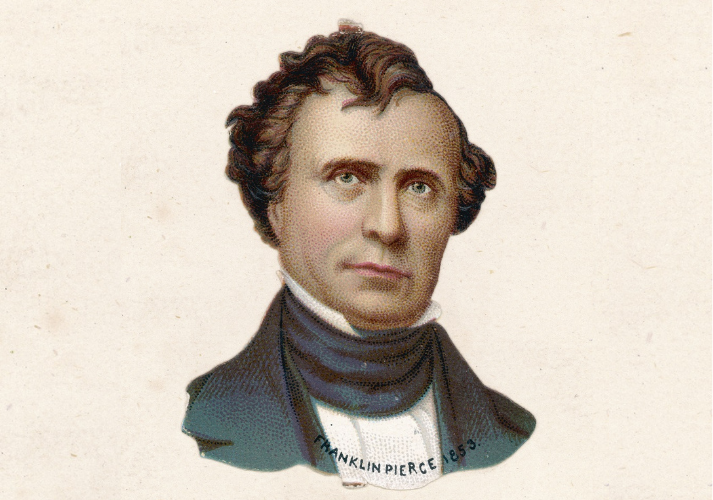
Now that you’ve learned about Franklin Pierce’s early life, personal struggles, and presidency, it’s time to dive deeper into his leadership and legacy.
Explore how his personal experiences influenced his decisions in office and how his presidency shaped the nation. Move to the Got It? section to see what key facts you can gather about his time in office.

Supplies


 FAVORITE
 Like
Like