Sign Up
School Account Sign Up

Lesson ID: 11088
Explore Prohibition, uncover its unexpected results, and compare past alcohol laws with today’s marijuana policies.




What Happens When a Popular Product Becomes Illegal?
Imagine that the government suddenly bans a product many adults buy and use. Stores can no longer sell it. Companies can no longer make it. Transporting it becomes a crime.
From 1920 to 1933, the United States tried this experiment with alcohol.
Supporters believed the ban would improve families, reduce crime, and protect public health. Opponents argued that the government had gone too far and that the law would be difficult to enforce.
Look closely at the photograph below.
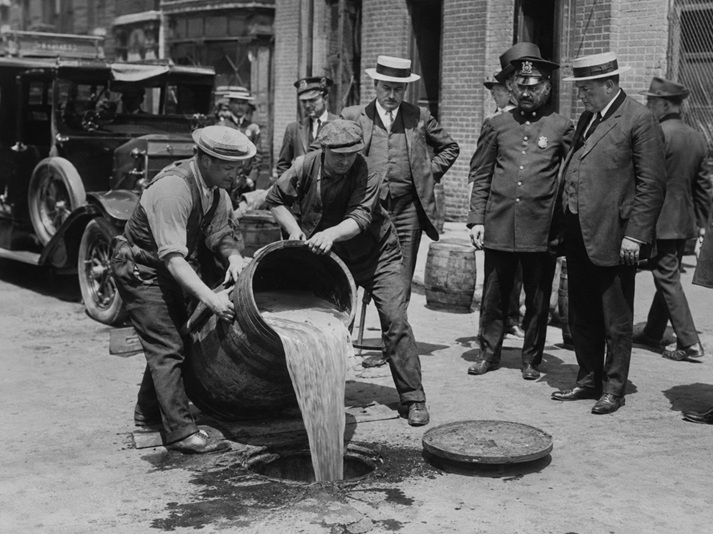
What is happening?
Why might government officials have destroyed the alcohol in public?
Do the people in the image appear to agree about what is happening?
What might happen to demand for alcohol after this supply is destroyed?
Banning a product does not automatically end the public’s desire for it. During Prohibition, that gap between law and demand helped create secret businesses, political corruption, and violent competition.
In this lesson, you will investigate one of the largest attempts by the federal government to regulate personal behavior and commerce.
You will also consider a harder question: When a law is intended to solve a social problem, how can people tell whether it is helping—or creating new problems?
The Temperance Movement
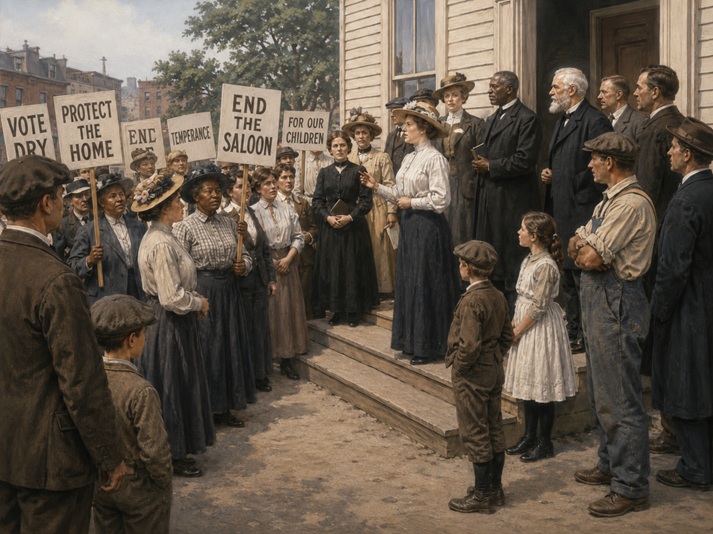
Prohibition did not appear overnight. During the 1800s and early 1900s, reformers organized a national movement against alcohol.
The temperance movement first encouraged people to drink less. Some reformers later demanded complete abstinence, meaning no alcohol at all.
Supporters connected alcohol abuse to serious problems, including:
domestic violence and family hardship
poverty and lost wages
workplace injuries
public drunkenness
crime and political corruption
Women became especially active in the movement. At the time, women had limited legal and economic power. A husband might spend the family’s income at a saloon, while his wife had few ways to protect the household finances.
Many women therefore viewed alcohol reform as a way to improve safety and stability at home.
Religious organizations, rural communities, progressive reformers, and groups such as the Anti-Saloon League also supported restrictions. Together, they became known as drys.
People who opposed a ban were called wets. They included brewers, restaurant and saloon owners, many urban residents, some immigrant communities, and people who believed the government should not regulate private choices.
The debate was never simply “alcohol is good” against “alcohol is bad.” Both sides often recognized the harm caused by alcohol abuse. They disagreed about whether a national ban was the best solution.
Persuasion Through Propaganda
Both dry and wet organizations tried to influence public opinion. They used speeches, newspaper articles, cartoons, posters, parades, and emotional stories.
Propaganda is communication created to shape people’s beliefs or actions. It may include accurate information, but it often simplifies a complicated issue, appeals strongly to emotion, or presents one side as obviously right.
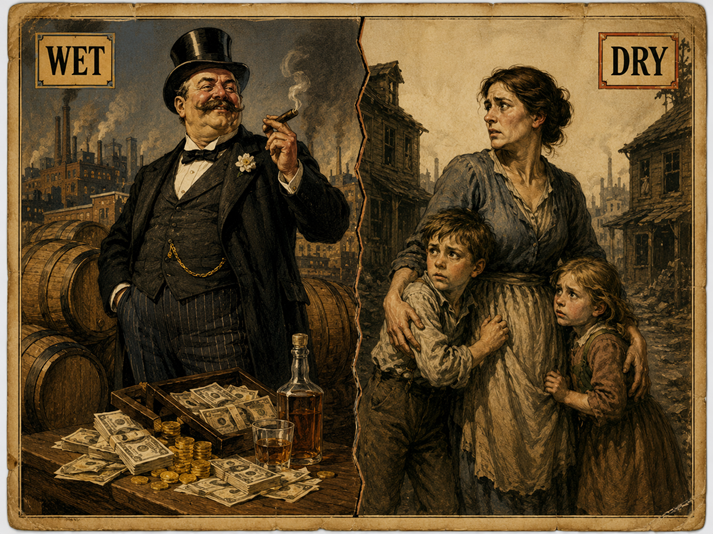
A typical dry poster might contrast two exaggerated figures:
a wealthy brewer who profits from alcohol
a worried parent trying to protect a family
This approach encourages viewers to connect alcohol with greed and family suffering. It does not examine every argument or show the issue in a neutral way. That is exactly why it can be persuasive.
When studying propaganda, ask:
Who created it?
Who was supposed to see it?
What emotion does it try to trigger?
What message does it communicate?
What information or viewpoint does it leave out?
One historical “wet or dry” poster presented voters with a sharp choice between supporting alcohol businesses and protecting families. Its design relied on stereotypes and emotional contrast rather than a detailed policy argument.
The Eighteenth Amendment
In December 1917, Congress proposed the Eighteenth Amendment. The states ratified it in January 1919.
The amendment prohibited the manufacture, sale, and transportation of intoxicating liquor in the United States. It took effect one year later, in January 1920.
A constitutional amendment states a broad rule. Congress still needed a law explaining how that rule would be enforced. The Volstead Act supplied those details.
The Volstead Act:
defined which beverages counted as intoxicating
established penalties for violations
gave the federal government authority to enforce the ban
However, the law did not make drinking alcohol itself illegal. People could consume alcohol they already owned. The law also allowed limited exceptions, including alcohol used for religious ceremonies, certain medical purposes, and some forms of home-produced fruit wine.
Those exceptions created loopholes. Suddenly, prescriptions for medicinal alcohol became unusually popular. Some people stored large supplies before the ban began. Others simply ignored the law.
Enforcement Problems
The federal government assigned enforcement to the Prohibition Unit, later reorganized as the Bureau of Prohibition.
Agents had an enormous task. They had to monitor:
thousands of miles of coastline and national borders
warehouses and shipping routes
cities filled with hidden bars
farms and homes where alcohol might be produced
corrupt officials willing to accept bribes
The government did not have enough agents, money, or equipment to stop every violation.
Public cooperation also varied. Prohibition had strong support in some rural regions and small towns, but many people in large cities opposed it. Police officers, judges, juries, and elected officials did not always enforce the law consistently.
A law becomes much harder to enforce when large numbers of people do not view it as legitimate.
Bootleggers and Speakeasies
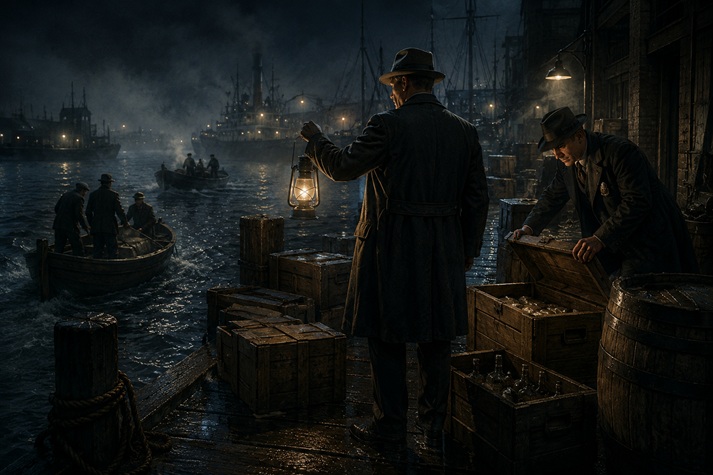
Demand for alcohol continued, so illegal suppliers stepped in.
A bootlegger was someone who illegally produced, transported, or sold alcohol.
Illegal alcohol entered the market in several ways:
smugglers brought it across borders or coastlines
hidden stills produced distilled liquor
people made alcohol in homes and rural buildings
criminals stole or redirected industrial alcohol
corrupt businesses secretly sold legal supplies
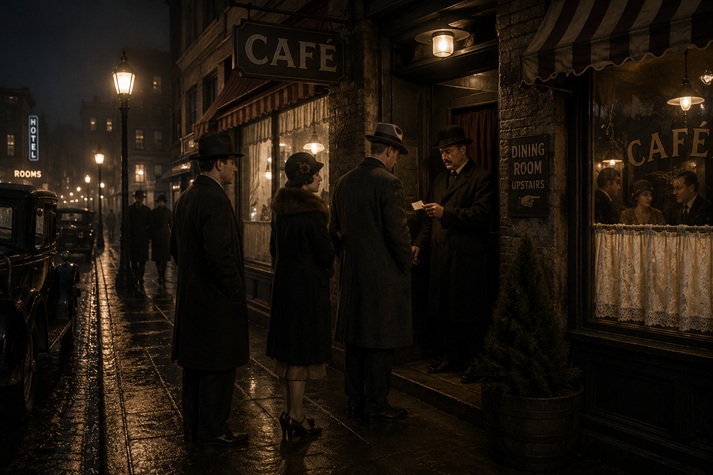
Speakeasies were illegal clubs or bars where customers could purchase alcohol. Some required passwords or membership cards. Others operated behind ordinary restaurants, stores, or apartment doors.
Speakeasies became associated with 1920s nightlife, dancing, and jazz. They also revealed a basic weakness in Prohibition: a law had banned the legal market, but it had not eliminated customer demand.
The market did not disappear. It went underground.
Organized Crime Expands
Illegal alcohol could generate enormous profits. Criminal organizations competed to control production, transportation, and sales.
Organized crime is coordinated criminal activity carried out by a continuing group for money or power.
Criminal networks used:
bribery
threats
extortion
smuggling
armed violence
control of illegal businesses
Gang leaders such as Al Capone became wealthy by supplying alcohol to speakeasies and other illegal sellers. Capone argued that he was meeting a public demand: customers wanted alcohol, and he supplied it.
That argument did not make his activities legal. It did, however, expose the economic force behind the black market.
When a popular product is banned, its price may rise because producing and selling it become riskier. High profits can attract criminal groups willing to accept those risks.
Competition between gangs sometimes led to deadly violence. The 1929 Saint Valentine’s Day Massacre, in which seven men connected to a rival gang were killed in Chicago, became a symbol of Prohibition-era organized crime.
Corruption and Respect for Law
Large illegal profits also encouraged corruption.
Bootleggers and gang members sometimes paid police officers, judges, politicians, and enforcement agents to ignore crimes or protect illegal businesses.
Critics argued that Prohibition was weakening respect for government because ordinary citizens regularly watched people violate the law without consequences.
Supporters responded that poor enforcement did not prove the law itself was wrong. In their view, the country needed better agents, stronger penalties, and greater public commitment.
Five years into Prohibition, public figures were still sharply divided. Some claimed the law had failed, increased corruption, and created profitable illegal markets. Others argued that alcohol consumption and alcohol-related harm had declined and that ending the law would abandon an important reform.
That disagreement raises an important distinction:
A law can have some intended benefits while also causing serious unintended consequences.
Did Prohibition Reduce Alcohol Use?
The results were complicated.
Alcohol consumption appears to have declined, especially during the early years of Prohibition. Some families benefited when heavy drinking decreased. Certain alcohol-related illnesses and arrests initially fell.
However, alcohol never disappeared.
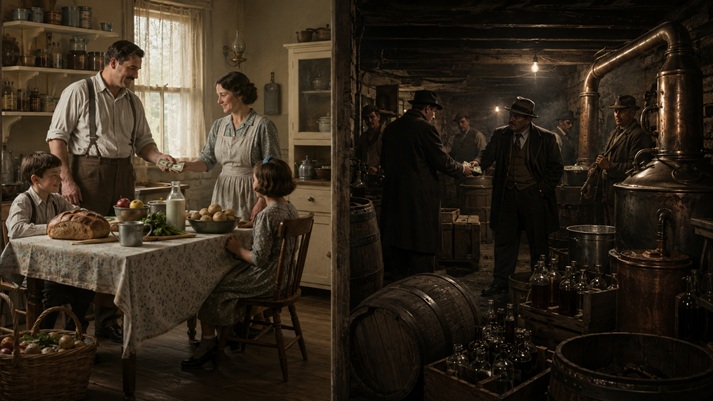
People who continued drinking often switched from beer to stronger liquor because concentrated alcohol was easier and more profitable to transport secretly. Illegal products were not inspected or regulated. Some contained dangerous ingredients.
Industrial alcohol created an especially serious hazard. It was intended for manufacturing rather than drinking. People sometimes tried to convert it into drinkable alcohol.
The federal government required manufacturers to add chemicals that made industrial alcohol unsafe to consume, but illegal sellers continued distributing altered products. Thousands of people suffered poisoning, blindness, serious illness, or death from contaminated alcohol.
This was one of Prohibition’s darkest unintended consequences.
The Debate Over Repeal
By the late 1920s, support for national Prohibition was weakening.
Critics focused on:
weak and uneven enforcement
corruption in government and law enforcement
organized crime and gang violence
unsafe illegal alcohol
the cost of enforcement
lost tax revenue
concerns about personal freedom
The Great Depression began in 1929 and added economic pressure. Legal alcohol production could create jobs and provide tax revenue at a time when both were desperately needed.
Supporters of Prohibition continued to warn that legal alcohol would increase addiction, family instability, illness, workplace problems, and violence.
The disagreement was not over whether alcohol could cause harm. The central question was whether a national criminal ban effectively reduced that harm.
Repeal
In 1933, Congress and the states approved the Twenty-first Amendment, repealing the Eighteenth Amendment.
This was the first—and remains the only—time one constitutional amendment was adopted specifically to repeal another.
Repeal did not remove all alcohol laws. Instead, authority largely returned to state and local governments. Governments could regulate:
who could manufacture or sell alcohol
where alcohol could be sold
the legal drinking age
business licenses
taxes
hours of sale
whether particular counties or towns remained dry
The end of national Prohibition replaced a near-total federal ban with a system of legal regulation.
What Did the “Noble Experiment” Reveal?
Prohibition showed that government policy can affect far more than the product being regulated.
The ban influenced:
family life
business
taxation
public health
policing
constitutional power
crime
individual liberty
It also demonstrated that passing a law is not the same as successfully enforcing it.
As you evaluate Prohibition, avoid a simple verdict such as “it worked” or “it failed.” Consider several questions instead:
Which goals did it partly achieve?
Which goals did it fail to achieve?
What unexpected effects did it create?
Who benefited from the law?
Who was harmed?
Could regulation have worked better than prohibition?
How much public support does a law need to remain effective?
The same questions continue to appear in modern debates about controlled substances, public health, personal choice, and government regulation.
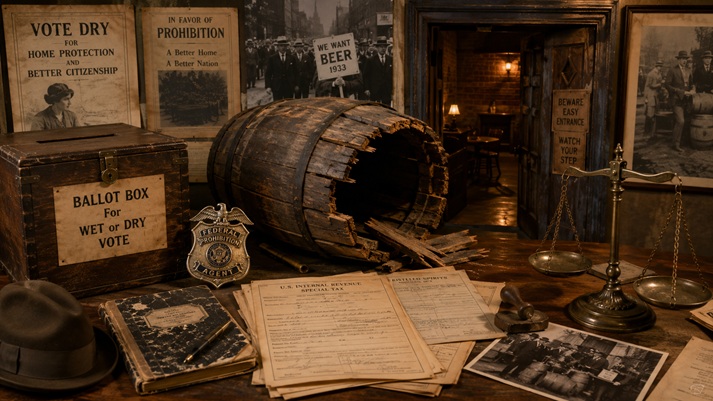
In the Got It? section, you will examine arguments used by both dry and wet campaigners and decide which claims are supported by historical evidence.

Supplies


 FAVORITE
 Like
Like