Sign Up
School Account Sign Up

Lesson ID: 10792
Unlock Poe’s hidden clues as you explore symbols, secrets, revenge, and a very suspicious cask of wine.




A Secret Message Hiding in Plain Sight
Imagine walking into a room where every object is trying to tell you something.
A cracked mirror might suggest a broken identity. A locked door might hint at a secret. A flickering candle might warn that time is running out. A silly hat with bells might look harmless until it shows up in a story about revenge.
That is the power of symbolism.
A symbol is a person, place, object, action, or event that stands for something beyond its literal meaning. Symbolism is the use of symbols to add deeper meaning to a story.
In other words, symbolism turns ordinary details into story clues.
More Than Meets the Eye
You already understand symbols, even if you do not think about them every day.
A heart can represent love.
A red traffic light can represent stop or danger.
A trophy can represent success.
A dove often represents peace.
A crown may represent power, leadership, or pride.
A mask can represent disguise, deception, or a hidden identity.
A storm can represent conflict, fear, change, or emotional chaos.
Symbols work because people connect objects and images with ideas. However, a symbol does not always mean the same thing in every story. Context matters.
For example, fire can represent warmth, survival, knowledge, inspiration, anger, destruction, or rebirth. A campfire in a friendship story may feel comforting. A burning building in a mystery may feel dangerous. A torch in a dystopian story may suggest rebellion or hope.
The symbol stays the same, but the meaning changes depending on how the author uses it.

Why Writers Use Symbols
Writers use symbolism because it adds layers to a story without stopping the plot to explain every idea.
Symbolism can help an author:
Show a theme rather than announce it.
Reveal something about a character.
Create mood or tension.
Foreshadow what may happen later.
Connect different parts of a story.
Make a simple object feel important.
Give readers something to notice, question, and interpret.
A story without symbolism can still be good, but symbolism gives readers a reason to look closer. It is the difference between eating a plain cupcake and discovering there is filling inside. Surprise: literature has snacks.
How to Spot Symbolism Like a Literary Detective
Symbolism can be tricky because authors usually do not wave a giant sign that says, “Important symbol here!”
Instead, watch for clues.
First, look for repetition. If an object, color, name, place, or action appears again and again, the author may want you to notice it.
Second, look for unusual attention. If the author describes something in detail, places it in an important moment, or gives it emotional weight, it may matter.
Third, connect the detail to the story’s theme. Ask what big idea the story explores. Revenge? Pride? Guilt? Freedom? Loss? Identity? Fear? Then ask how the possible symbol connects to that idea.
Fourth, study the effect. Ask how the symbol makes the scene feel. Does it create suspense? Show danger? Reveal irony? Make a character seem foolish, trapped, proud, or powerful?
Finally, use evidence. A symbol is not just a random guess. You should be able to point to details from the story that support your interpretation.
A helpful sentence frame looks like this:
The ______ symbolizes ______ because ______.
For example:
The locked door symbolizes secrecy because it keeps the truth hidden from the characters and the reader.
Common Symbols and Possible Meanings
Symbols do not have one automatic meaning, but some images often carry familiar associations. Use these as starting points, not final answers.
Light often suggests truth, knowledge, safety, hope, or discovery.
Darkness often suggests mystery, fear, ignorance, danger, or the unknown.
Water often suggests life, cleansing, change, danger, or rebirth.
Seasons often suggest stages of life or emotional change. Spring may suggest renewal, while winter may suggest death, waiting, or loneliness.
Roads or paths often suggest choices, journeys, or personal growth.
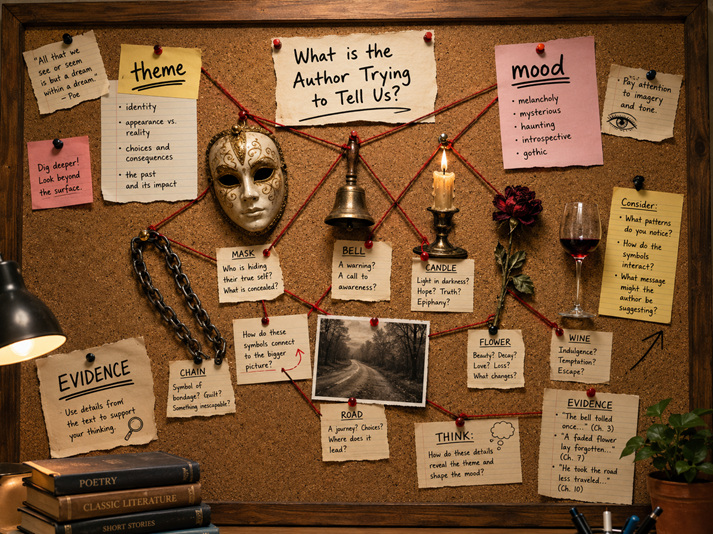
Chains often suggest imprisonment, control, guilt, or being trapped.
Bones often suggest death, the past, family history, or hidden truth.
Masks often suggest disguise, false identity, performance, or deception.
Bells often suggest celebration, warning, foolishness, or doom, depending on the story.
Names can also work as symbols. An author may give a character a name that hints at personality, irony, or fate. For example, if a character named Lucky has the worst day imaginable, the name may create irony.
Meet Edgar Allan Poe
Before you look for symbols in “The Cask of Amontillado,” you need to know a little about the writer behind the story.
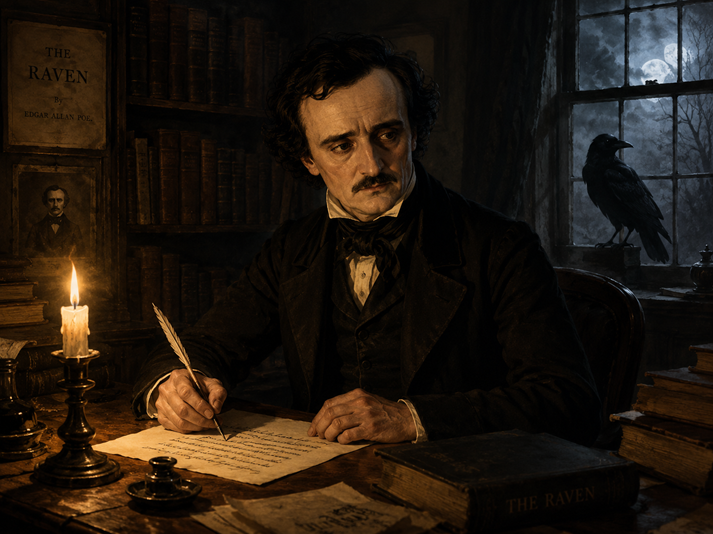
Edgar Allan Poe was born in 1809 and became one of the most famous American writers of the 1800s. He wrote poetry, short stories, criticism, mystery, horror, humor, and early science fiction. He helped shape the modern detective story through “The Murders in the Rue Morgue,” and he became widely famous after publishing “The Raven” in 1845.
Poe is especially known for psychological horror. That means his stories often focus less on monsters with claws and more on fear, guilt, obsession, pride, grief, and the dark choices people make.
In many Poe stories, the most terrifying thing is not hiding in the shadows. It is hiding inside a character’s mind.
Poe’s own life included poverty, loss, professional struggle, and mystery. He died in 1849 under unclear circumstances, and people still debate the cause of his death. That mystery has become part of his public image, but his writing matters because of his craft.
Poe knew how to build suspense, create unreliable narrators, and turn small details into symbols with big meaning.
The Story You Are About to Enter
“The Cask of Amontillado” is one of Poe’s most famous short stories. It follows a narrator named Montresor, who believes a man named Fortunato has insulted him. Instead of confronting Fortunato openly, Montresor plans revenge.
The story takes place during carnival season, a time of celebration, costumes, masks, and public excitement. That festive setting creates a sharp contrast with Montresor’s secret plan.
While others celebrate above ground, Montresor leads Fortunato below ground into his family’s catacombs, the dark burial chambers beneath his home.
A cask is a barrel, and Amontillado is a type of dry sherry wine. Montresor claims he has purchased a cask of rare Amontillado and wants Fortunato, who prides himself on his wine knowledge, to judge whether it is real.
Fortunato’s pride makes the bait especially tempting.
That setup matters because Poe fills the story with symbols connected to pride, deception, revenge, death, and hidden motives.
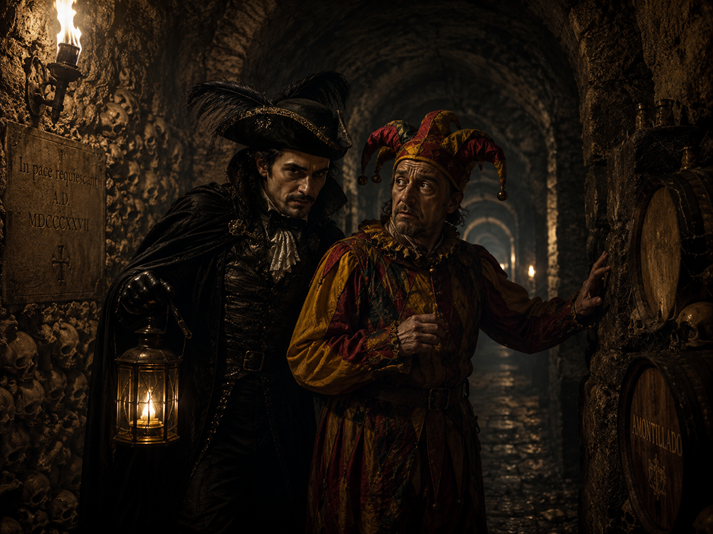
Symbols to Watch For in “The Cask of Amontillado”
As you read, pay close attention to the details Poe repeats or emphasizes.
Fortunato’s name sounds like “fortunate,” which creates irony because his situation becomes extremely unfortunate.
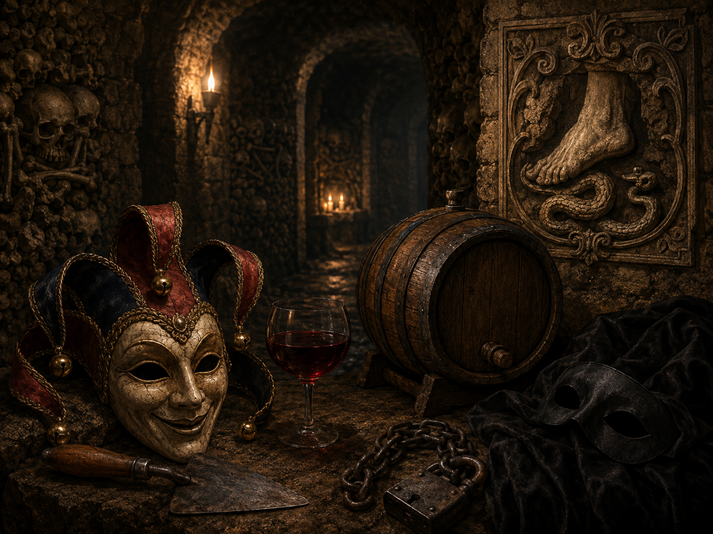
The carnival setting suggests masks, performance, chaos, and deception.
Fortunato’s jester costume suggests foolishness, entertainment, and a person who may not realize he is being tricked.
The bells on Fortunato’s cap may seem playful, but they can also become a chilling reminder of his doom.
The catacombs suggest death, buried secrets, family history, and hidden motives.
The bones in the catacombs remind you that death surrounds the characters long before the story reaches its ending.
The nitre on the walls shows decay and sickness in the damp underground space.
The Amontillado represents temptation because Fortunato wants it badly enough to ignore danger.
Montresor’s coat of arms and family motto reveal his pride and his belief that revenge is justified.
The trowel becomes important because it connects Montresor’s plan to building, secrecy, and entrapment.
Do not worry about catching every symbol immediately. Good readers often notice more during a second reading. Poe rewards close attention, which is a polite way of saying he hides the creepy stuff in plain sight.
A Coat of Arms and a Warning
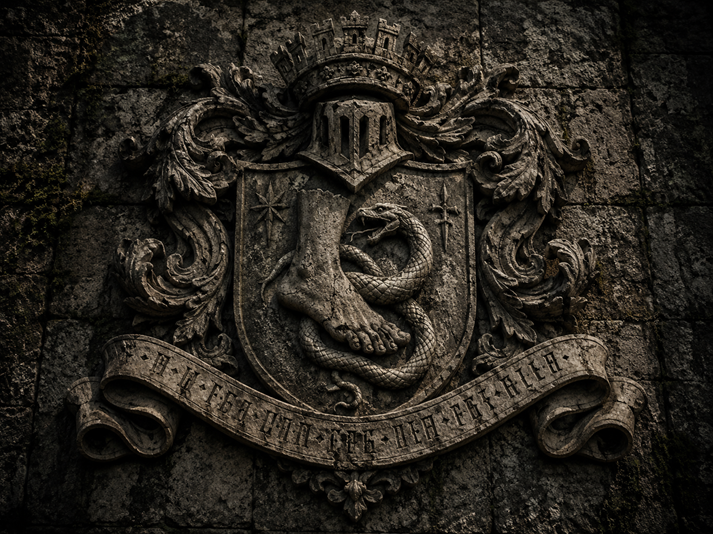
A coat of arms is a symbolic design connected to a family, group, or individual. It often uses colors, animals, objects, and a motto to communicate values, history, or identity.
In “The Cask of Amontillado,” Montresor’s coat of arms matters because it reveals how he sees himself and his family. It includes a foot crushing a serpent, while the serpent bites the heel. His family motto means, “No one attacks me without punishment.”
That is not exactly a warm and fuzzy family slogan.
This symbol helps you understand Montresor’s mindset. He sees revenge as part of his identity, pride, and family honor. Whether his thinking is fair or moral is a different question, and the story pushes you to think carefully about it.
Your Symbolism Game Plan
When you read “The Cask of Amontillado,” use this simple process.
Notice important details.
Ask what they literally are.
Ask what they may represent.
Connect them to a theme.
Support your answer with evidence from the story.
Here is an example using a symbol from a different kind of story:
A wilted flower literally is a dying plant.
It may represent fading hope, loss, or neglect.
If the story focuses on a friendship falling apart, the flower may symbolize that damaged friendship.
A strong explanation might say: The wilted flower symbolizes the fading friendship because it appears after the characters stop trusting each other, and its dying condition reflects the damage in their relationship.
That same process will help you analyze Poe’s symbols without guessing wildly. Wild guesses belong in carnival games, not literary analysis.
Get Ready to Practice
You now know what symbolism is, why writers use it, how to identify it, and which symbols deserve special attention in “The Cask of Amontillado.”
Next, you will practice spotting symbols, explaining what they may represent, and supporting your ideas with evidence from Poe’s story.

Supplies
Additional Resources


 FAVORITE
 Like
Like