Sign Up
School Account Sign Up

Lesson ID: 10602
Read, mark, and decode a powerful poem. Learn how to annotate and uncover hidden meaning like a pro.




Picture This
You are walking down a street where something feels off. No one is talking. Doors are shut. People are watching from behind curtains—but no one steps outside. Something is happening right in front of everyone… and no one says a word.
Here’s the real question: Is staying silent always the safe choice?
Sometimes, silence protects peace. Other times, silence allows harm to grow.

In this lesson, you will read and analyze a poem called “The Quiet Street.” As you read, you will figure out how poets use structure, tone, and word choice to send powerful messages—without ever stating them directly.
What Does It Mean to Annotate a Poem?
Reading poetry is not about rushing through lines and hoping something makes sense. It is about slowing down and interacting with the text.
Annotating means you actively engage with what you read. Instead of just reading the poem, you mark it up, question it, and break it apart to understand what it is really saying.
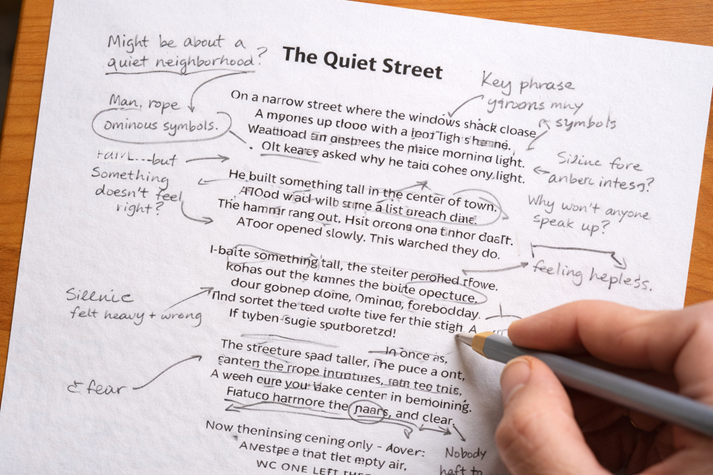
Think of annotation as having a conversation with the poem.
When you annotate, you:
This helps you move from “I read it” to “I understand it.”
A Simple Strategy That Works Every Time
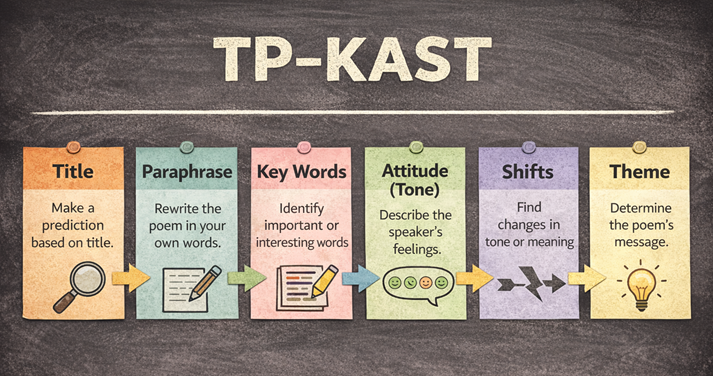
To make annotation easier, use a step-by-step method. This lesson uses a strategy called TP-KAST. It gives you a clear path through any poem, even if it seems confusing at first.
Here is how it works.
Title
Start before reading. Look at the title and make a prediction. What might the poem be about? Titles often give clues you only fully understand later.
Paraphrase
Rewrite each section of the poem in your own words. Do not worry about sounding poetic. Focus on meaning. If you can explain it simply, you understand it.
Key Words
Identify the most important or interesting words in each section. These words often reveal tone, mood, or theme.
Attitude (Tone)
Figure out how the speaker feels. Is the tone calm, nervous, angry, or fearful? Tone can change as the poem develops.
Shifts
Watch for changes. A shift might happen when the mood changes, when new information appears, or when the speaker’s perspective shifts. These moments are important.
Theme
At the end, determine the message. What is the poem really saying about people, choices, or life? A strong theme is usually not directly stated—you have to infer it.
Understanding Tone and Mood
Tone is how the speaker feels. Mood is how the poem makes you feel.
For example:
In many poems, tone changes over time. Tracking those changes helps you understand the deeper message.
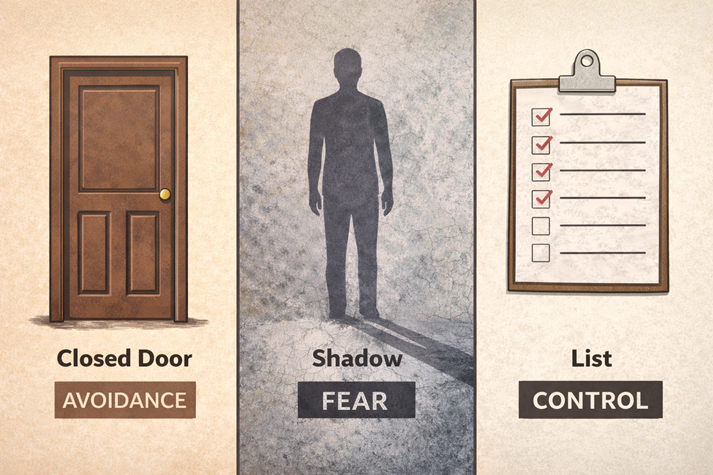
Understanding Symbolism
Poets often use objects, people, or events to represent bigger ideas.
This is called symbolism.
For example:
When you notice something repeated or emphasized, ask: Could this stand for something more?
Putting It All Together
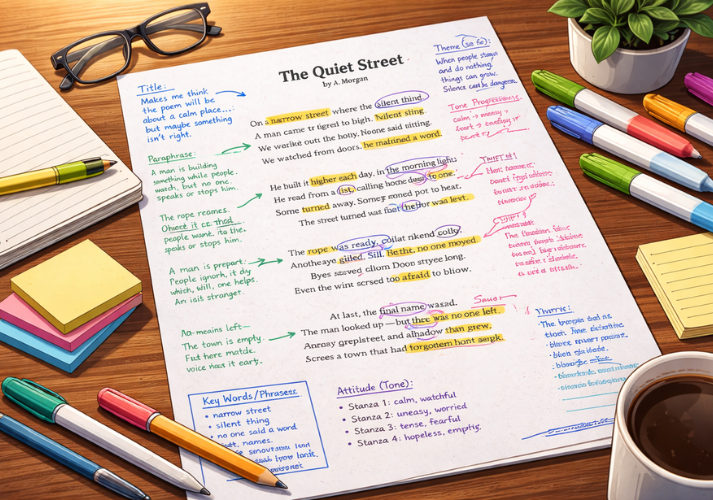
When you combine all these strategies, poetry becomes much clearer. You are no longer guessing—you are analyzing.
You are answering these questions.
Now it is time to put these skills into action.
In the Got It? section, you will read “The Quiet Street” and begin annotating it step by step using the TP-KAST strategy.

Supplies


 FAVORITE
 Like
Like