Sign Up
School Account Sign Up

Lesson ID: 10377
Travel across the universe! Shrink the solar system, measure with light-years, and discover how vast space really is.




Blown Away by the Universe
Think you're tall? Maybe you've got a growth chart at home, or you've stood back-to-back with a friend to see who’s taller.
But here’s a mind-bender: how do you measure something so big that it doesn’t even fit in your imagination?
That’s the Universe. It's not just big—it’s outrageously, ridiculously, brain-bendingly big.
Bigger than every building, mountain, planet, or star you’ve ever seen. Bigger than you could walk, fly, or drive in a lifetime—or even a million lifetimes!
Take a journey through space to see just how far we have to go to understand what “big” really means.

Your Cosmic Address
You live in a house, on a street, in a town or city—but zoom out and things get wild.
Here’s your full cosmic address.
Your Location
Earth
Solar System
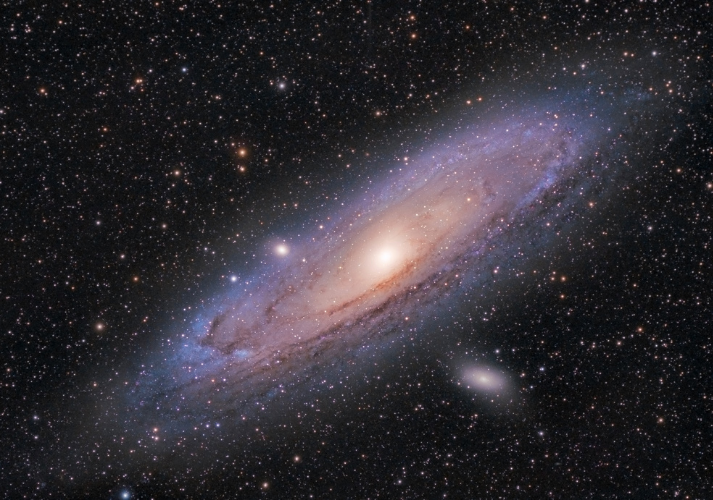
Milky Way Galaxy
Observable Universe
The Universe (as much as we can imagine and way beyond that!)
At each level, the space gets more... spacious. In fact, when you move from Earth to our Solar System, or from our Solar System to the Milky Way, the distances explode.
Even trying to draw it all on paper would be impossible—it wouldn’t fit unless your paper was the size of a continent!
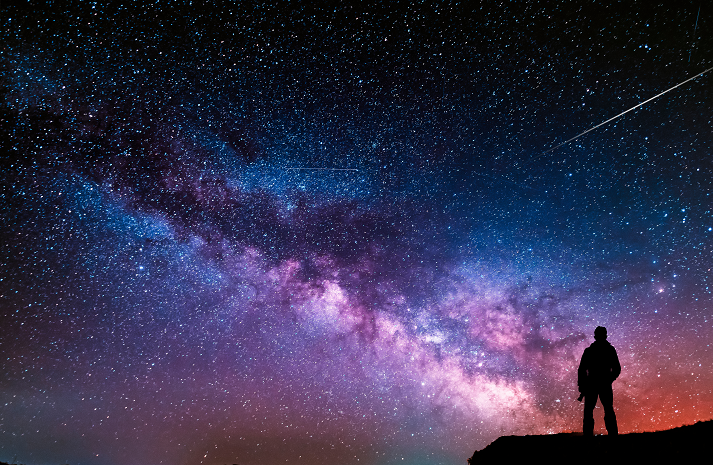
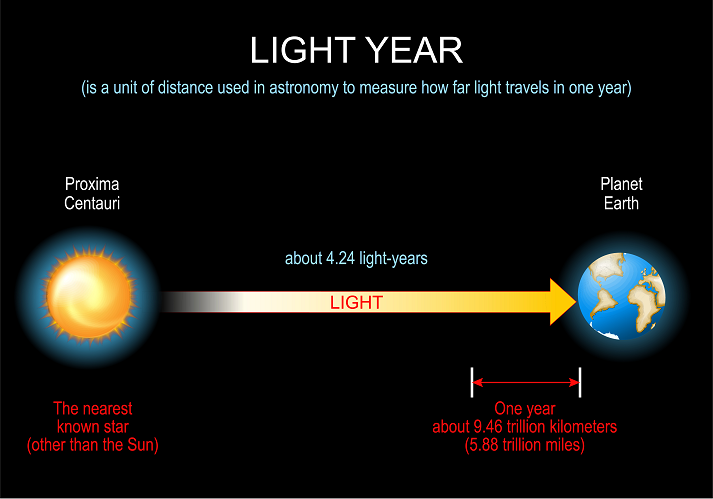
Light-Years: The Universe’s Ruler
Scientists had to come up with a new way to measure distance in space because regular measurements just don’t cut it. That’s where light-years come in.
Light travels super fast—about 300,000 kilometers per second.
In just one second, light can circle Earth seven times.
A light-year is how far light travels in one year: about 6 trillion miles.
Let's put that in perspective.
The sun is 8 light-minutes away from Earth.
The next closest star, Proxima Centauri, is 4.24 light-years away.
The observable universe? It's 93 billion light-years across!
Yeah... take a moment to breathe.
Shrinking the Universe: Scale It Down!
Let’s scale it down to make it manageable. Imagine this.
If the sun was the size of a beach ball, Earth would be a tiny pea about 4½ inches away.
At that scale, Jupiter would be an orange, 2 feet from the sun.
Neptune? Over 11 feet away.
And Pluto (yep, still counting it): almost 15 feet out!
Now imagine shrinking the entire solar system down to the size of a room.
You’d need 7 miles of desert to make a model that fits this scale—just like scientists did in the Black Rock Desert, using a marble for Earth and driving miles to reach the outer planets.
Even crazier? If the entire Milky Way galaxy was shrunk down to the size of your classroom, our solar system would be smaller than a grain of salt!
And the observable universe? You’d need a microscope to find the galaxy in that room. And we’re just one galaxy of billions.
A Universe of Stars (and Sand)
Think of all the sand on the shore.
Now imagine: there are more stars in the universe than grains of sand on Earth’s beaches.
Some stars are small, others are huge—much bigger than our sun. Many have planets, and some of those planets might even be a lot like Earth. Mind. Blown.
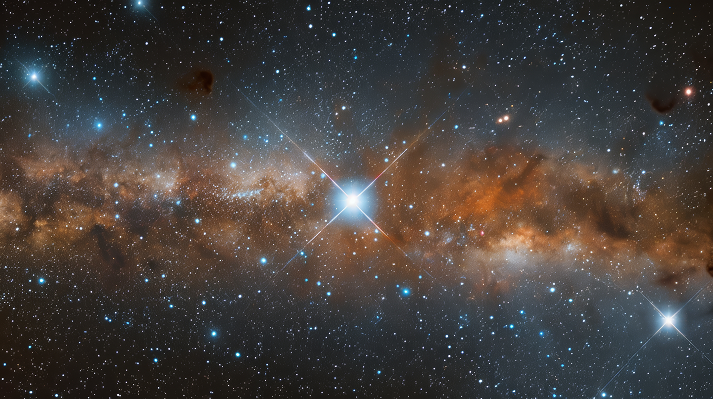
Stars, Meteors, and Marvels
The night sky is full of wonders.
Shooting stars (which are really meteors burning in Earth’s atmosphere).
Constellations, or patterns of stars with names like Orion, Ursa Major, and Pegasus.
Planets that wander through the sky and can sometimes be seen with your eyes or binoculars.
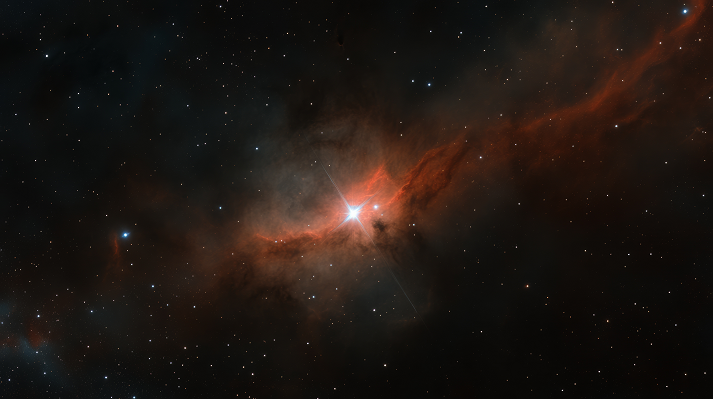
Even the colors and brightness of stars vary—some stars are red, some blue, some appear bigger or smaller depending on how far they are and how bright they really shine.
Is Your Brain Feeling Stretched Yet?
It’s okay if your head feels like it’s going to pop. You’ve just zoomed from your front yard to the edge of the known universe.
And the truth is, no one knows exactly how big it all is. We only know what we can see—the observable universe.
Beyond that? It's still a mystery. Somewhere out there, light from stars is still on its way to us. We just haven’t seen it yet.
Ready to Explore More?
Now that your brain’s taken a cosmic stretch, it’s time to put your learning to the test.
In the Got It? section, you’ll scale down the solar system yourself to really understand the crazy distances between planets. Get ready to shrink the universe with some fun, hands-on practice!

Supplies
Suggested Reading


 FAVORITE
 Like
Like