Sign Up
School Account Sign Up




When Failure Isn’t the End
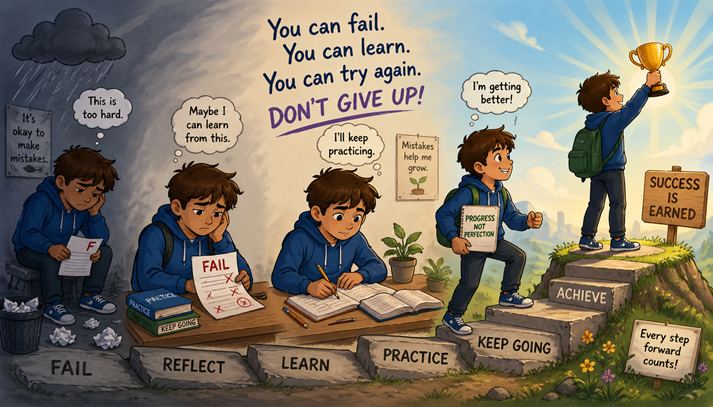
Maybe you missed a shot in a game, got a bad grade, or felt too nervous to speak up. That moment can feel heavy. But here is something important to know: failure is not the end of your story.
Many successful people failed first.
A famous singer was told she was too shy. A group of musicians was told their music would never be popular. A future leader lost many elections before finally winning. A student was told they were not smart enough to learn.
They all had something in common. They kept going.
That is called courage.
What Is Courage?
Courage is not about never being scared. Courage means you feel scared, but you still try anyway.
Courage can look like:
Sometimes courage is loud, like helping someone in danger. But sometimes courage is quiet. It can be a small voice in your mind that says, “Try again tomorrow.”
Courage and Failure Go Together
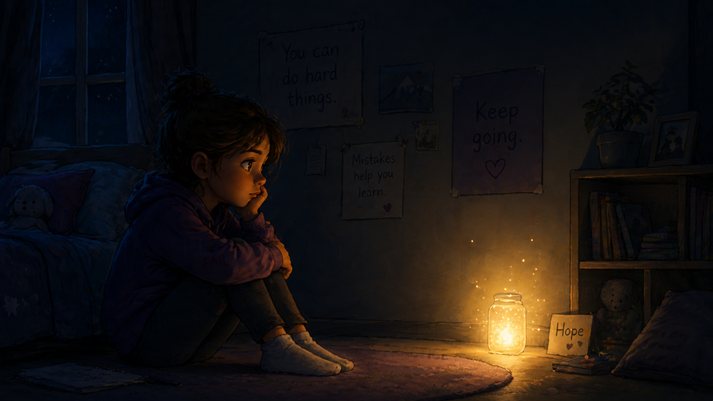
Failure and courage are teammates. When something does not go your way, you get a choice. You can give up, or you can try again.
People who show courage:
Think about this: If nobody ever failed, nobody would learn anything new.
How Courage Shows Up in Real Life
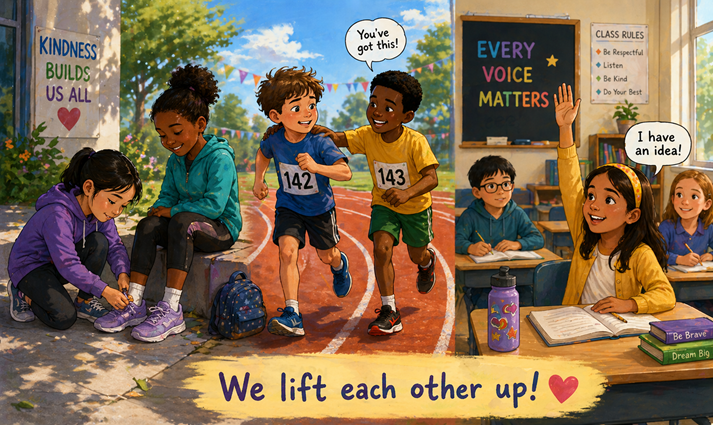
You do not have to be famous to be courageous. Courage shows up in everyday life.
You might show courage when you:
Building Your Courage
Courage is like a muscle. The more you use it, the stronger it gets.
You can build courage by:
Every time you try again, you are being courageous.
Get Ready to Practice
Now that you understand what courage is and how it connects to failure, it is time to think about it in your own life. Up next, you will explore your ideas and practice recognizing courage in action.

Supplies





 FAVORITE
 Like
Like