Sign Up
School Account Sign Up

Lesson ID: 10295
Turn everyday objects into history clues as you explore artifacts, archaeologists, and the stories hiding in plain sight!




Treasure? Trash? Time Machine!
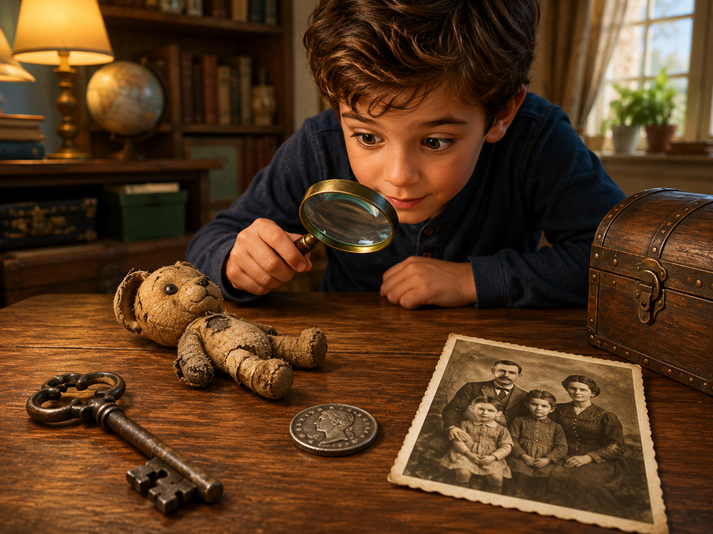
Imagine finding an old button buried in the dirt. It is small. It is dusty. It looks ordinary.
But wait.
That tiny button could tell a big story.
Objects can be clues from the past. Some clues sit in museums. Some hide underground. Some wait in closets, drawers, attics, basements, or boxes under beds.
A chipped cup, a handmade toy, an old coin, a piece of lace, a tool, a letter, or a suitcase can help you learn how people lived long ago.
In this lesson, you will become a history detective. Your mystery tools are artifacts.
Clue Word: Artifact
An artifact is an object made, used, or changed by people. Artifacts help you learn about life in the past.
Artifacts can be very old, like stone tools used by early humans. They can also be much newer, like a lunchbox from 50 years ago or a phone from the early 2000s.
Yes, old technology counts. One day, someone may look at a tablet or game controller and say, “Wow, people used that?” History comes for everyone.
Artifacts can include many kinds of objects, such as:
| toys | tools | clothing | dishes | jewelry | |
| coins | books | letters | photos | furniture | |
| pottery | baskets | buttons | instruments | pencils |
An artifact does not have to be fancy or expensive. An everyday object can teach a lot.
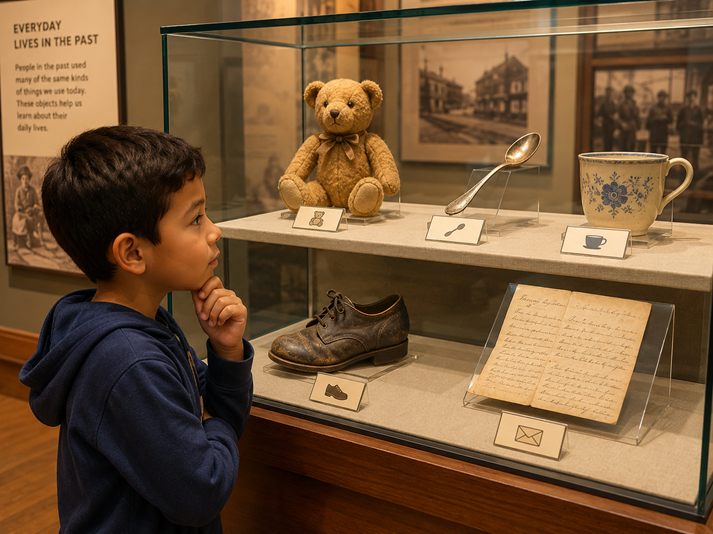
A worn pair of shoes can show what kind of work someone did. A toy can show what children enjoyed. A cooking pot can show what foods people prepared. A letter can show what people cared about, where they lived, or how they communicated.
Artifacts are powerful because they connect you to real people. History is not only about kings, queens, presidents, wars, or famous buildings. It is also about families, workers, children, artists, travelers, farmers, builders, and neighbors.
Meet the Past Detectives
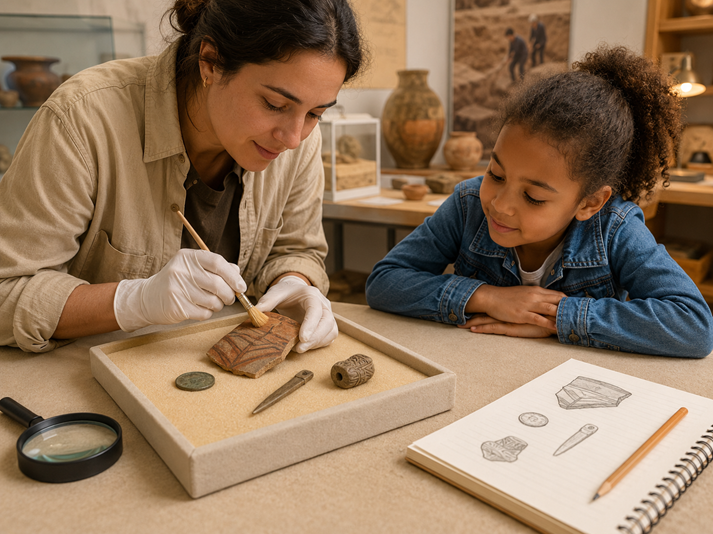
Archaeologists are scientists who study people from the past by looking at the things they left behind. They study artifacts, buildings, ruins, tools, trash pits, roads, homes, and other clues.
Archaeologists are not the same as paleontologists.
Paleontologists study fossils, such as dinosaur bones, ancient plants, and other remains of living things from long ago.
Archaeologists study human history. They look for clues about how people lived, worked, ate, traveled, celebrated, learned, and solved problems.
Archaeologists do much more than dig. Digging is only one part of the job. The most important part is figuring out what the clues mean.
How Archaeologists Find Clues
Archaeologists do not just wander around with shovels and hope for the best. That would be messy, and also a great way to lose a very important button.
First, archaeologists study a place. They may read old maps, stories, journals, photographs, or records. They may talk with people who know the history of the area. They may look at the land carefully to see if anything seems unusual.
This first search is called a survey.
During a survey, archaeologists look for clues on the ground, such as broken pottery, bits of glass, tools, stones shaped by people, or marks where buildings once stood.
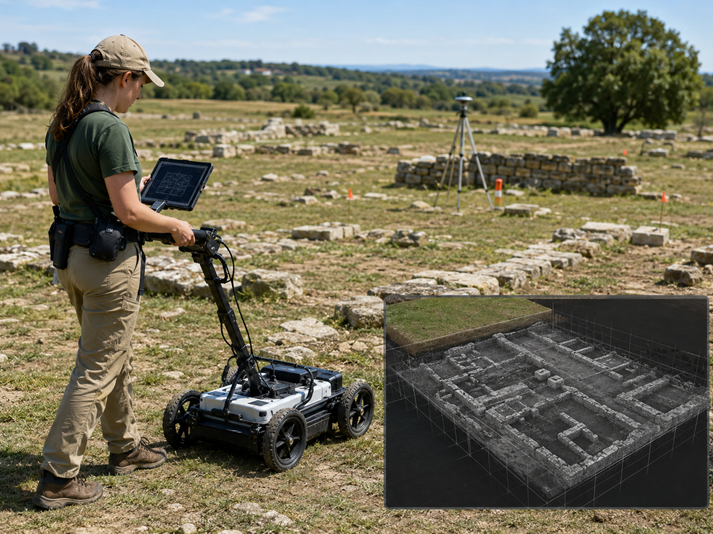
Today, archaeologists may also use technology to see the bigger picture. They may use satellite images, drones, or special tools that can help find shapes underground without digging right away.
If they find a place that may hold artifacts, they mark the area carefully.
Digging With Care
When archaeologists dig, they call it excavation.
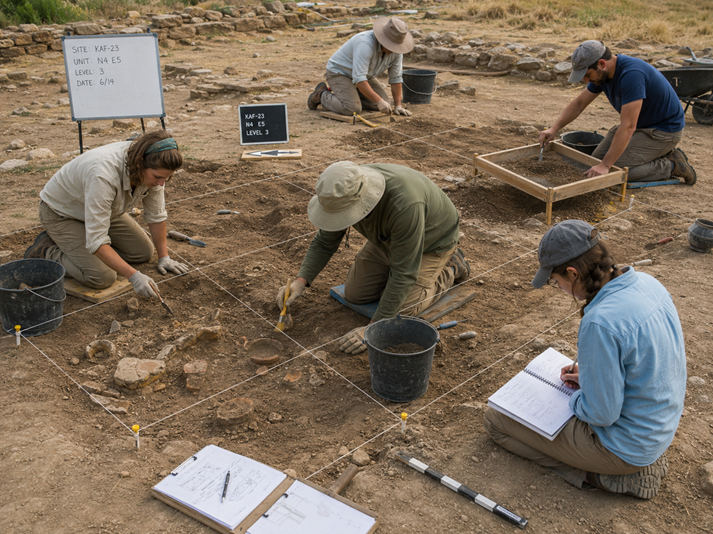
Excavation means carefully digging to uncover artifacts or other clues. Archaeologists dig slowly because each object’s location matters.
They often divide the ground into a grid. A grid is a set of squares marked with string, rope, or measuring tools. The grid helps archaeologists record exactly where each artifact was found.
Why does that matter?
Imagine finding a spoon, a broken dish, and a fireplace in the same spot. Those clues may show where people cooked or ate. If the objects get moved around without notes, the story becomes harder to understand.
Archaeologists use many tools, including:
| brushes | trowels | shovels | buckets | screens | |
| cameras | notebooks | computers | measuring tapes | ||
A screen works a little like a sifter. Archaeologists place dirt in the screen and shake it gently.
Small dirt pieces fall through. Tiny artifacts, bones, shells, beads, seeds, or bits of pottery may stay behind. Tiny clues can tell huge stories. History is sneaky like that.
What Happens After Digging?
After archaeologists find artifacts, they study them. Many artifacts go to a lab, museum, university, cultural center, or other safe place where experts clean, label, photograph, measure, and compare them.
Archaeologists ask questions like these.
Artifacts do not speak, so archaeologists must study them carefully. One clue helps, but many clues together tell a stronger story.
For example, archaeologists studying Ancient Egypt have found objects such as pottery, tools, jewelry, writing tablets, statues, baskets, toys, and pieces of clothing. These artifacts help people learn about homes, jobs, beliefs, art, trade, writing, and daily life in ancient communities.
Archaeologists also study more recent history. At old farms, towns, factories, schools, and homes, they may find nails, dishes, glass bottles, coins, buttons, toys, food remains, or handmade objects.
These clues can show how children played, what families ate, what work people did, and what life was like for people whose stories were not always written down.
That is one reason archaeology matters. It can help bring many different voices into history.
Respecting Artifacts
Artifacts are not just “old stuff.” They may be important to families, communities, countries, or cultures. Some artifacts connect to people’s traditions, beliefs, or memories.
That means artifacts should be treated with care and respect.
If you ever find something that looks old or important, do not dig it up or take it home. Leave it where it is and tell a trusted adult. Moving an artifact can damage it or remove it from the place that helps explain its story.
Good history detectives protect clues.
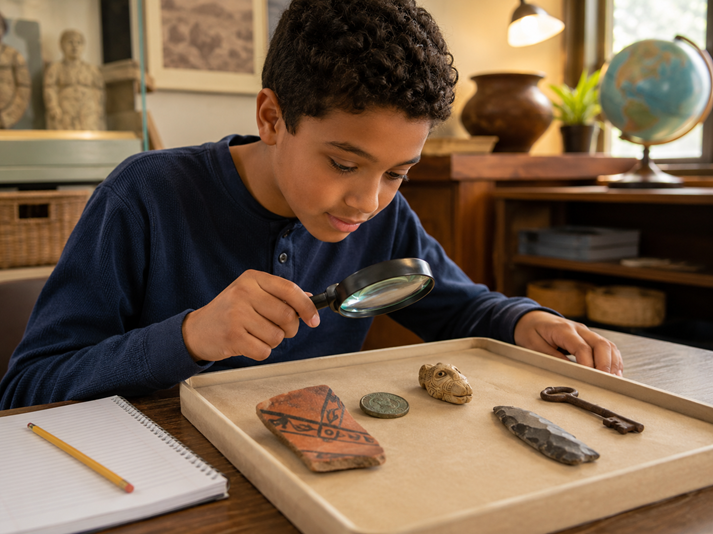
Your Turn to Think Like an Archaeologist
Look around your home or learning space. Choose one object that could teach someone about you or your family someday.
Ask yourself these questions.
A favorite toy might show what you liked to play. A recipe card might show a food your family enjoyed. A sports jersey might show a team you supported. A worn backpack might show how you learned, traveled, or carried your world around every day.
An artifact does not need to be ancient to matter. It only needs to help tell a human story.
You now know what artifacts are, what archaeologists do, and how objects can help explain the past.
Next, you will practice finding clues in artifacts and deciding what those clues can teach you.

Supplies
Additional Resources


 FAVORITE
 Like
Like