Sign Up
School Account Sign Up

Lesson ID: 10127
Become a source detective! Learn how primary and secondary sources help you understand history.




Imagine you find an old photograph tucked inside a book.
The photo shows a huge crowd standing near the Lincoln Memorial in Washington, D.C. A man is speaking at a microphone. People are listening closely.
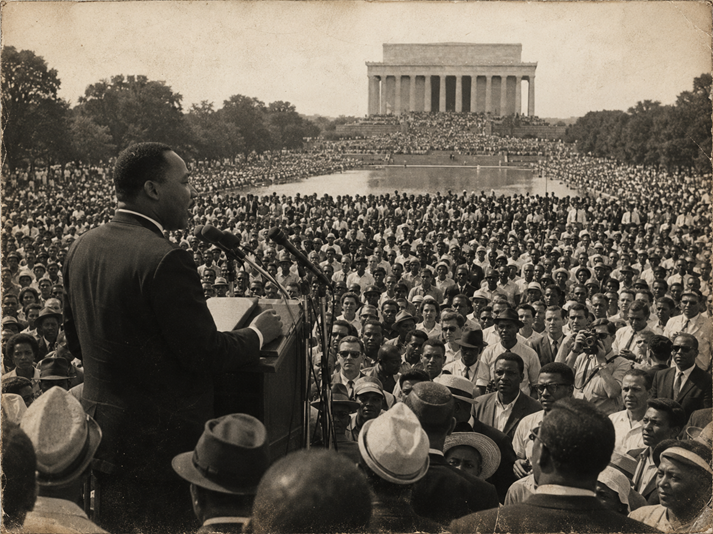
You have questions right away.
Congratulations. You are now thinking like a historian.
Historians study the past, but they cannot hop into a time machine and watch events happen. Rude, honestly. A time machine would save everyone a lot of reading.
Instead, historians use sources.
A source is something that gives information about a person, place, event, or idea.
A source can be a photograph, speech, letter, diary entry, newspaper article, book, interview, video, map, object, or website.
Some sources come directly from the time of the event. Other sources are created later to explain the event.
These are called primary sources and secondary sources.
Primary Sources

The word primary means first.
A primary source gives firsthand information about an event, person, or time period.
A primary source is usually created:
A primary source gets you close to the moment.
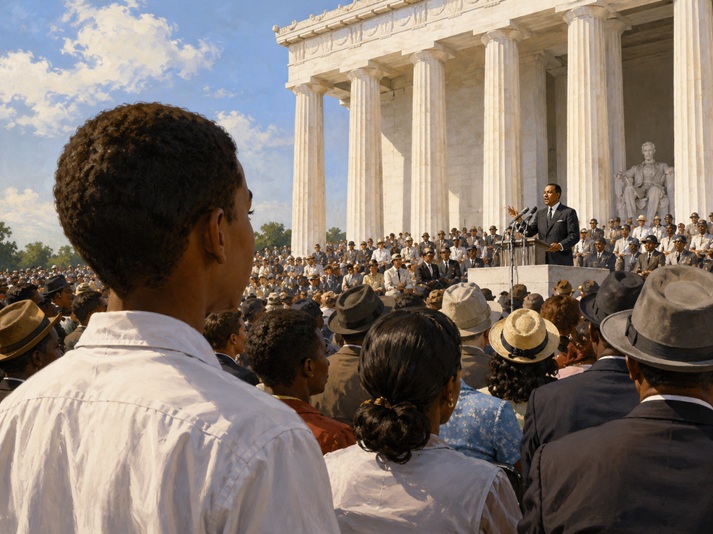
For example, on August 28, 1963, Dr. Martin Luther King, Jr. gave his famous “I Have a Dream” speech during the March on Washington.
Read this short excerpt from his speech.
“I have a dream that one day this nation will rise up and live out the true meaning of its creed: We hold these truths to be self-evident that all men are created equal.”
This excerpt is a primary source because it comes from the actual speech Dr. King gave that day.
A video of Dr. King giving the speech would also be a primary source.
So would:
These sources are powerful because they help you see, hear, or feel as if you were part of the event.
Primary sources can help you answer questions like these.
However, primary sources do not always tell the whole story.
A person at the back of a crowd might describe the event differently from a person standing near the stage. A photograph might capture a single moment but not explain what happened before or after it. A diary entry might show one person’s feelings but not everyone’s experience.
That does not make primary sources bad. It just means historians need to ask careful questions.
When you study a primary source, ask:
Secondary Sources

The word secondary means second or after first.
A secondary source is created after an event by someone who did not experience it firsthand.
A secondary source explains, summarizes, or interprets information about the past.
For example, read this paragraph.
Dr. Martin Luther King, Jr. gave his “I Have a Dream” speech during the March on Washington on August 28, 1963. About 250,000 people gathered to support civil rights and equal treatment under the law. The speech became one of the most famous speeches in United States history because it shared a powerful vision of justice, freedom, and equality.
This paragraph is a secondary source.
It was not spoken by Dr. King at the march. It was written later to explain the event.
Secondary sources can include:
Secondary sources are useful because they help you understand the bigger picture.
They can help answer questions like these.
Primary and Secondary Sources Work Together
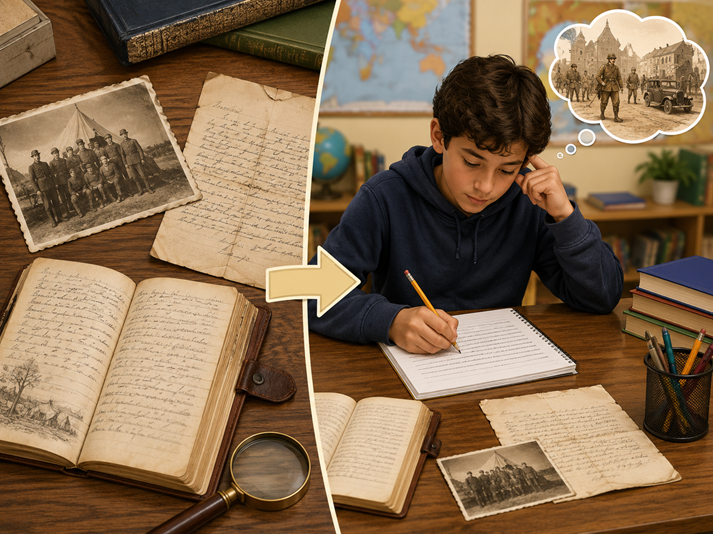
Primary sources and secondary sources are both important.
Think of primary sources as puzzle pieces from the past.
Think of secondary sources as someone explaining how the puzzle pieces fit together.
For example, a photograph from the March on Washington might show thousands of people gathered near the Lincoln Memorial. That photograph helps you see the size and mood of the event.
A secondary source can explain why the people gathered, what they hoped to change, and how the march affected the Civil Rights Movement.
You need both.
One gives firsthand evidence.
The other gives explanation and context.
Try this quick example.
Source 1: A diary entry written by a student on the day her school opened a new playground.
Source 2: A school newsletter written one month later explaining how students raised money for the new playground.
Source 1 is primary because the student wrote it on the day of the event and shared her firsthand experience.
Source 2 is secondary because it was written later to explain the event.
Now try another.
Source 1: A photograph of a baseball game taken during the game.
Source 2: A book written 20 years later about the history of that baseball team.
The photograph is a primary source because it came from the time of the game.
The book is a secondary source because it was written later to explain the team’s history.
Copies Count, Too
Here is one sneaky little detail.
A copy of a primary source can still be a primary source.
If you look at a scanned copy of an old letter, it is still a primary source because the words came from the original letter.
If you look at a photocopy of a newspaper article from 1963, it can still be a primary source if the article was written at the time of the event.
The copy is not the original object, but the information still comes from the original time period.
Oral Histories
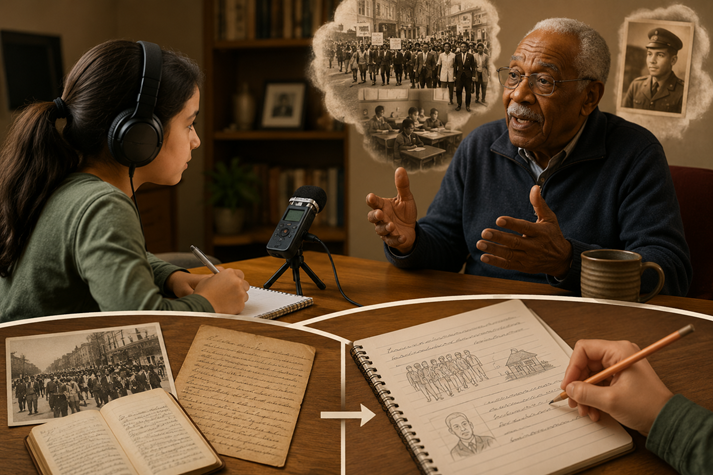
Sometimes people share memories of events many years later. This is called an oral history.
An oral history is a spoken account from someone who experienced an event firsthand.
Even if the interview happens years later, it can still be a primary source because the person is sharing their own experience.
For example, an interview with someone who attended the March on Washington could be a primary source.
The person was there. They are sharing what they saw, heard, and felt.
Source Detective Check
When you are deciding whether a source is primary or secondary, ask yourself three questions.
If the source comes from the time of the event or from someone who experienced it, it is probably a primary source.
If the source was created later to explain or describe the event, it is probably a secondary source.
Now you are ready to practice sorting sources like a real historian.
Move on to the Got It? section to investigate different source clues and decide which ones are primary and which ones are secondary.

Supplies


 FAVORITE
 Like
Like